An effective spam filter should stop bots without forcing real customers through difficult image tests or blocking assistive technologies. We compare modern alternatives and show how multiple layers of protection can reduce both spam and lost leads.
Most people assume that more form spam calls for a stricter CAPTCHA. In practice, the strictest check can become yet another barrier for customers who use screen readers, have strict tracking protection, or cannot interpret an image challenge. The best reCAPTCHA alternative is therefore rarely a single product. Instead, it is a layered defense that combines uncertain signals without causing genuine enquiries to disappear.
The wrong protection carries costs in both directions. A weak filter fills the inbox and wastes working hours, while an aggressive filter may discard a quote request that can never be recovered. The goal should not be to guess who is a customer, but to stop obvious abuse and provide a safe fallback route for uncertain submissions.

reCAPTCHA alternatives: what happens before the form reaches your server?
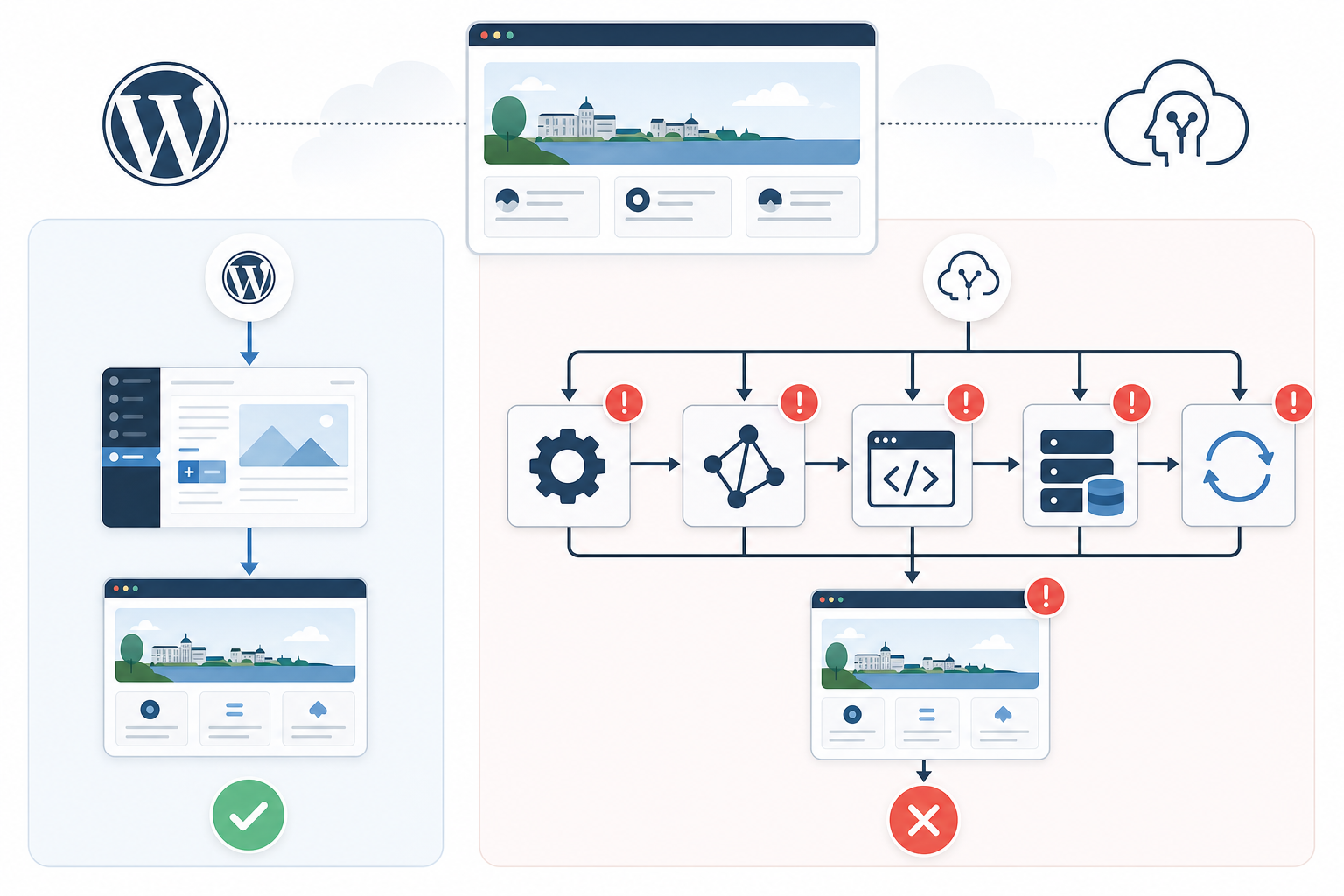
The short answer is that both reCAPTCHA and Cloudflare Turnstile generate a token in the visitor's browser. The token is submitted with the form to your server, which must then verify it with the provider. A check that only runs in JavaScript can be bypassed by a bot sending data directly to the form's endpoint—the server address that receives the message.
At the same time, the integration creates an external dependency. Third-party scripts may be blocked, the network connection may fail, and a token may expire if the form takes a long time to complete. We would therefore generate the token close to the point of submission, verify the expected hostname and form flow on the server, and map the external requests and data flows introduced by the solution. For privacy questions, organizations should consult the provider's current documentation and use IMY's guidance at imy.se; this article does not constitute legal advice.
The fallback route determines whether the check becomes protection or a customer trap. If the script fails to load, the form should explain what went wrong, retain the information already entered, and offer another attempt or an alternative contact method. A missing token may increase the risk level, but it should not automatically cause a perfectly reasonable customer message to be deleted without feedback.
A honeypot works best as a silent signal, not as the only barrier
An empty extra field can catch simple bots without requiring the visitor to solve a task. The field must not be required, should be excluded from the keyboard tab order, and should not be presented to screen readers. The server must also tolerate the field being completely absent because different browsers and security tools can affect which fields are submitted.
The main pitfall is autofill. Browsers and password managers may complete unexpected fields, particularly if the honeypot's name resembles phone, address, or company. A completed field should therefore increase the risk score or send the message to quarantine rather than trigger an invisible deletion.
Submission time is useful for the same reason: a bot may submit the form unreasonably quickly, but so might a real user pasting prepared text. Honeypots, timing indicators, duplicates, and content patterns are more effective together than individually. This creates an accessible CAPTCHA alternative that most visitors never even notice.

Server-side filtering should rank risk—not guess who is a customer
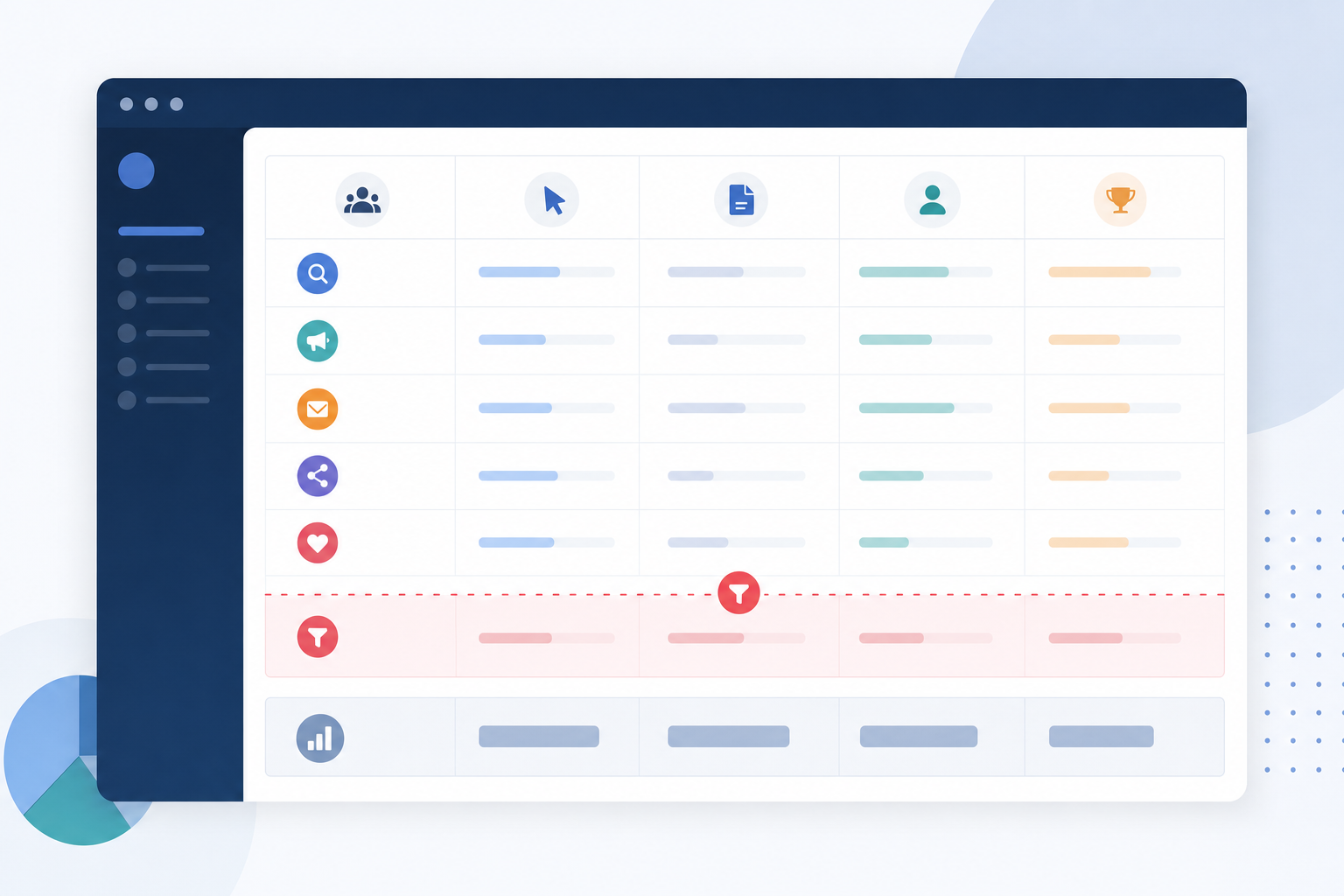
A good server-side filter starts with factors that can be explained: field validation, duplicate detection, reasonable rate limiting, and verification of any CAPTCHA tokens. Weaker signals can then be considered, such as numerous links, repeated identical text, or several attempts in quick succession. An interactive check only needs to be displayed when the risk is elevated.
An IP address is not enough to establish identity. Offices, mobile operators, and VPN services may cause many genuine visitors to share an address, so a simple IP block risks excluding entire groups. Instead, combine the address with the form session, endpoint, time window, and repeated identical submissions. Language, free email domains, or the presence of a link are too weak as indicators to determine on their own whether someone is a customer.
Each decision should receive a structured reason code, such as “invalid token” or “repeated identical text.” Avoid copying the customer's entire message into technical logs. Instead, store uncertain submissions in a protected review queue with restricted access. This allows false positives to be recovered and rules to be adjusted before valuable enquiries are permanently lost.
reCAPTCHA, Turnstile, honeypot, or custom risk assessment?
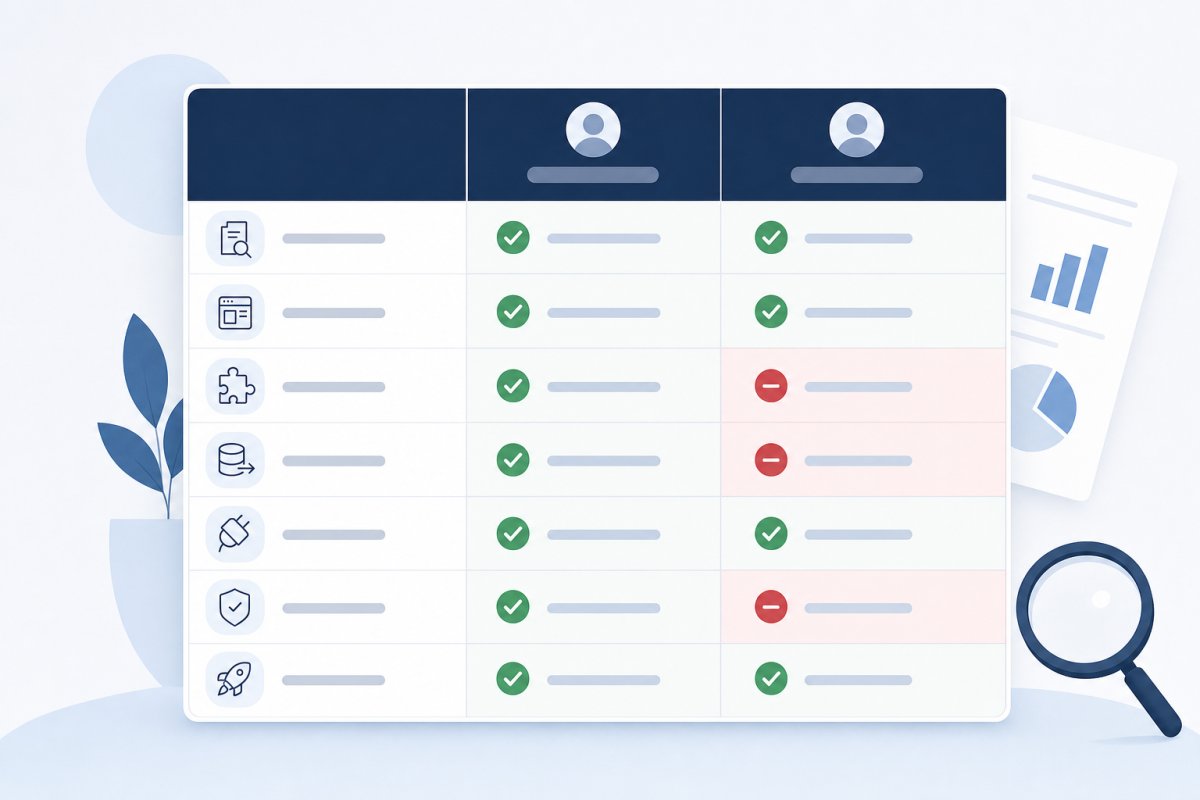
The methods are not entirely interchangeable. reCAPTCHA and Turnstile assess the visitor before your server accepts the form, while honeypots and server-side risk scoring use your own signals. The most robust solution never allows a single signal to make the entire decision.
Google reCAPTCHA v3
reCAPTCHA v3 provides an external risk assessment without normally displaying a traditional image challenge.
- It usually works without a visible checkbox and may create less friction than older CAPTCHA variants.
- Support for actions allows contact forms and other flows to be assessed using different rules.
- A low external score can be difficult to explain, making strict thresholds risky.
- The solution adds Google dependencies and requires a plan for blocked scripts, privacy, and content security.
Best for: websites that already use Google's ecosystem and treat the score as a signal rather than an automatic rejection.
Cloudflare Turnstile
Turnstile can be used in invisible or visible modes and does not require the entire website to run behind Cloudflare's proxy.
- It can often run without image puzzles and can be adapted to different risk levels.
- It can be integrated even when the website uses different hosting or infrastructure.
- It remains an external client-side check that may be affected by script blocking and network failures.
- A valid token says nothing about whether the message content is relevant.
Best for: organizations that want frictionless initial protection while retaining server-side rules and a working fallback route.
Honeypot fields
A honeypot is a hidden extra field that simple bots complete while regular visitors leave it empty.
- It normally requires no external service and has relatively low technical complexity.
- It provides a silent signal that can be combined with timing, repetition, and unusual form data.
- More advanced bots can identify or ignore hidden fields.
- Poor implementation can interfere with keyboards, screen readers, or browser autofill.
Best for: a simple baseline layer where a completed field increases the risk but does not discard the message on its own.
Custom server-side risk scoring
A custom risk engine can combine form behavior, content, and results from Turnstile or reCAPTCHA.
- It can combine honeypots, timing, text patterns, links, repetitions, frequency, and token results.
- It makes decisions observable through reason codes and rules that can be adjusted without visible friction.
- It requires ongoing monitoring as both spam and legitimate customer messages evolve.
- Aggressive rules based on language, domains, links, or IP addresses can create false positives.
Best for: organizations where a missed enquiry is costly and uncertain cases can be reviewed rather than deleted.
Use Turnstile or reCAPTCHA v3 as an early signal, add a honeypot, and let the server assess the combined result. Deliver low-risk submissions, send uncertain cases for review, and block only clearly automated abuse.

Build a multi-layered spam filter
-
Verify reCAPTCHA or Turnstile tokens on the server
A token generated in the browser is not approval in itself. Have the backend verify it against Google's or Cloudflare's Siteverify API using the secret key, checking details such as the hostname and expected flow. A missing or invalid token should generate a reason code and be assessed alongside the other signals.
-
Run the check close to submission—not on page load
Generate the token when the user interacts with the form or presses submit so that it does not expire while they complete a lengthy quote request. Turnstile's explicit rendering and reCAPTCHA's programmatic execution provide better control over timing. If an error occurs, focus should move to a clear message, the completed fields should be retained, and the user should be able to try again.
-
Use the honeypot as a risk signal, not an automatic verdict
Add a standard text field with a neutral name, hide it visually with CSS, and use
tabindex="-1"andaria-hidden="true"to keep it away from keyboard users and assistive technologies. The backend should accept the field being absent and assess any match alongside submission time, links, and repetitions. -
Score behaviors and allow for multiple outcomes
Build a simple risk model in which invalid tokens, honeypot matches, link patterns, identical text, and rapid attempts contribute to the overall assessment. Low-risk submissions can be sent to email or a CRM, uncertain cases to a review queue, and obvious abuse can be rejected. Akismet or OOPSpam may be added as another signal, but never as the sole decision-maker.
-
Limit traffic without blocking shared customer networks
Rate limiting—the restriction of how frequently requests may be made—can be implemented in Cloudflare WAF, NGINX, Laravel Rate Limiter, or an equivalent layer. Combine the IP address with the form type, session cookie, email patterns, and short-lived counters in a system such as Redis. Log the reason for the flag so that the restriction can be adjusted when it produces false positives.
If you are looking for a reCAPTCHA alternative, server-verified Turnstile is a reasonable starting point, but it should still be supplemented with a silent honeypot and a backend that ranks risk. Store uncertain submissions in a separate queue and review recurring false positives before tightening the rules. This is how an experienced team would approach the problem: protect genuine contact routes first, make every rejection explainable, and close the door only on obvious abuse.