The Accessibility Act now applies to many Swedish e-commerce businesses, but its requirements are easy to misinterpret. Here is a practical path from assessing whether you are covered to defining requirements, testing and prioritising improvements.
You run a profitable online store with nine employees and ask your web agency to fix a few accessibility issues, convinced that the company is too small to be covered. Once the ownership structure and group figures are taken into account, the assessment may change completely, making accessibility requirements a concrete management and procurement issue in 2026.

Is Your E-commerce Business Covered by the Act in 2026?
The Act (2023:254) on the Accessibility of Certain Products and Services applies to e-commerce services offered remotely and electronically to consumers for the purpose of entering into a consumer contract, such as purchasing a product, booking a treatment or taking out a subscription. The assessment should therefore be based on what visitors can actually do, not on whether the business calls the solution a store, customer portal, membership website or booking system. A purely B2B store with verified business sales and an information website where consumers cannot enter into contracts will normally fall outside the specific definition of an e-commerce service, while a consumer-oriented product selection that leads to a booking or checkout will typically be covered. If visitors can enter into a contract, the review must cover the entire customer journey, including search, filtering, variant selection, shopping cart, login, identification, payment, error handling and order confirmation, even when some steps are provided by an external supplier. Specific transitional rules may affect contracts entered into before 28 June 2025, but they do not provide a general exemption for an old website or for new purchases made in 2026. You should therefore document the flows and contract types on which your assessment is based.
The Microenterprise Exemption Depends on Both Staffing and Financial Figures
To qualify for the exemption, a service provider must have fewer than ten persons employed and meet the financial condition through annual turnover or a balance sheet total not exceeding EUR 2 million. Staffing is calculated according to the rules for annual work units, which means that the figure may differ from the number of names on the organisation’s staff list and must be based on accurate company data. Partner enterprises and linked enterprises may also mean that all or part of the staffing and financial figures of other companies must be included. An independent company with nine employees may therefore be exempt, while an equally small subsidiary in a larger group may be fully covered. The web agency should not provide its own legal assurance regarding the microenterprise exemption. Instead, it should request a dated, written position from the client’s management or legal adviser, supported by information about staffing, finances and ownership structure. Even an exempt company will benefit from making new themes, components and checkout flows accessible, as future growth could otherwise turn accumulated technical debt into an urgent compliance project.
Disproportionate Burden Is a Documented Exemption, Not a General Budget Objection
The exemptions for a fundamental alteration to the nature of the service or a disproportionate burden are intended for specific situations and must not be used as a general argument that the development budget is limited. The assessment must be made for each function or requirement. This means that the cost of replacing an entire platform does not automatically justify a form having no labels, keyboard focus being invisible or an error message being communicated only in red. For every unresolved issue, the company should be able to demonstrate the impact on users, cost estimates, available resources, alternatives considered, the person responsible for the decision and the date for reassessment. Funding expressly allocated to accessibility measures cannot be used to support a claim of unreasonable cost, while third-party content may only be treated as beyond the company’s control when the business genuinely has no ability to fund, develop, select, replace or contractually govern the solution. The Swedish Post and Telecom Authority, PTS, is the central supervisory authority for e-commerce services. Anyone invoking an exemption must therefore maintain proper records of the assessment, any required notification and recurring reassessments when technology, contracts or financial circumstances change.

The Web Agency’s Scope Must Include the Purchase Flow, Manual Testing and Verifiable Deliverables
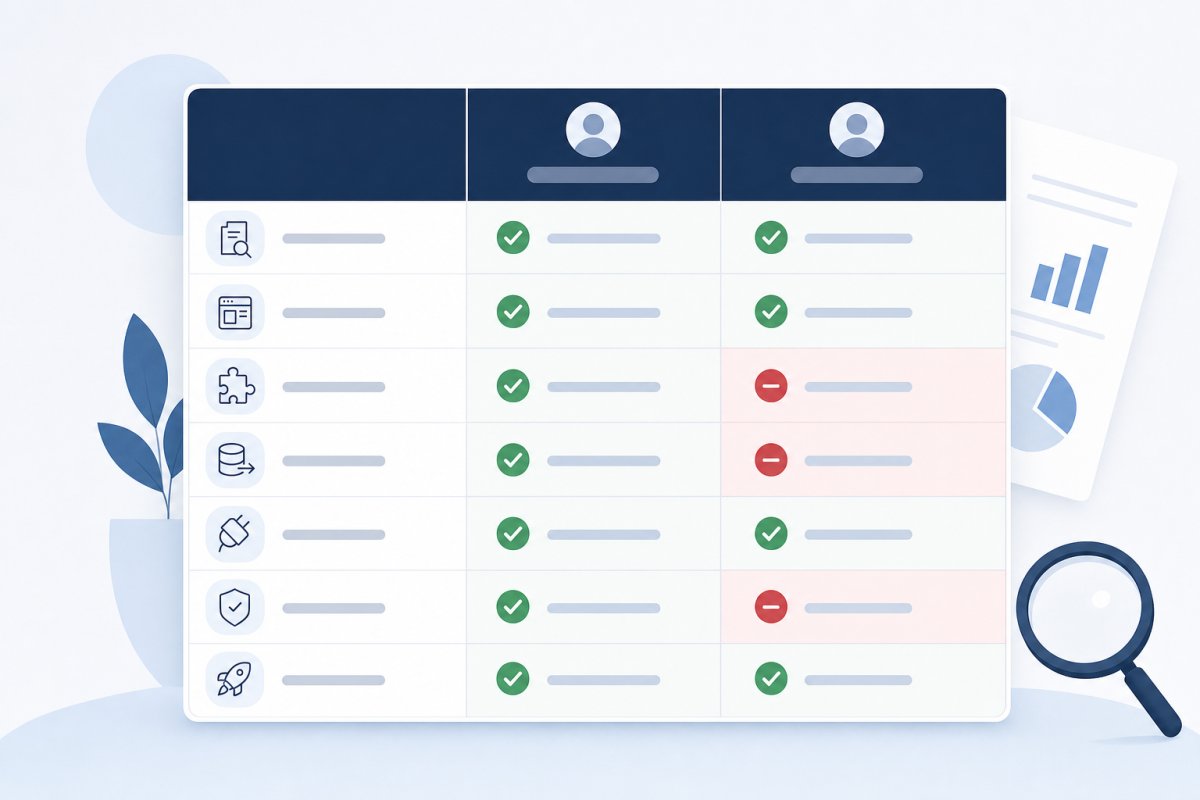
An automated WCAG scan of the home page can identify code errors, but it cannot show whether a customer can select a size, understand a validation error, move focus through a modal or complete payment without a mouse. The agency should test representative templates from the home page and search results through to category pages, product pages, variant selection, shopping cart, checkout, payment, account and order confirmation. Cookie management, support dialogues and other embedded components should also be included in the sample. Require a combination of relevant requirements from EN 301 549 and WCAG, automated analysis and manual testing with a keyboard, screen reader, magnification, 200 per cent zoom, reflow and deliberately triggered form errors. WCAG 2.1 Level AA is a central basis for testing, but on its own it does not cover all the Act’s requirements for the service and its information. In practice, the report should show exactly where a variant is communicated by colour alone, why focus moves behind a dialogue, how an unlabelled discount field is interpreted by assistive technology or at which payment stage keyboard navigation becomes blocked. Each issue should include the URL or component, reproduction steps, requirement reference, severity level, responsible supplier and retest result. The deliverables must also include accessible information about how the service meets the requirements, for example in the terms and conditions or equivalent customer information, without uncritically copying the accessibility statement used by public-sector organisations.
Four Risk Areas That Determine Whether Your E-commerce Service Actually Meets the Accessibility Requirements in 2026
The Microenterprise Exemption Is Lost If a Single Size Condition Is Exceeded
The size assessment consists of a staffing condition and a financial condition: the business must have fewer than ten persons employed, and at least one of the two financial measures—annual turnover or balance sheet total—must remain within the EUR 2 million threshold. It is therefore not enough to count only the people who work directly with the online store, as annual work units within the business and relevant figures from partner or linked enterprises may affect the result. The supporting documentation should specify the financial year and exchange rate used, how ownership interests and control relationships were assessed, and who approved the conclusion. If the company subsequently grows or completes an acquisition, the assessment must be updated rather than allowing an outdated exemption decision to continue circulating within the organisation.
Example: A store with seven employees and annual turnover of SEK 28 million will normally be unable to rely on the microenterprise exemption if its balance sheet total also exceeds the permitted threshold. If the balance sheet total remains within the threshold, the financial criteria must still be assessed together with any relevant group figures.
The Consumer-Facing E-commerce Service Is Covered, Not Just the Website’s Home Page
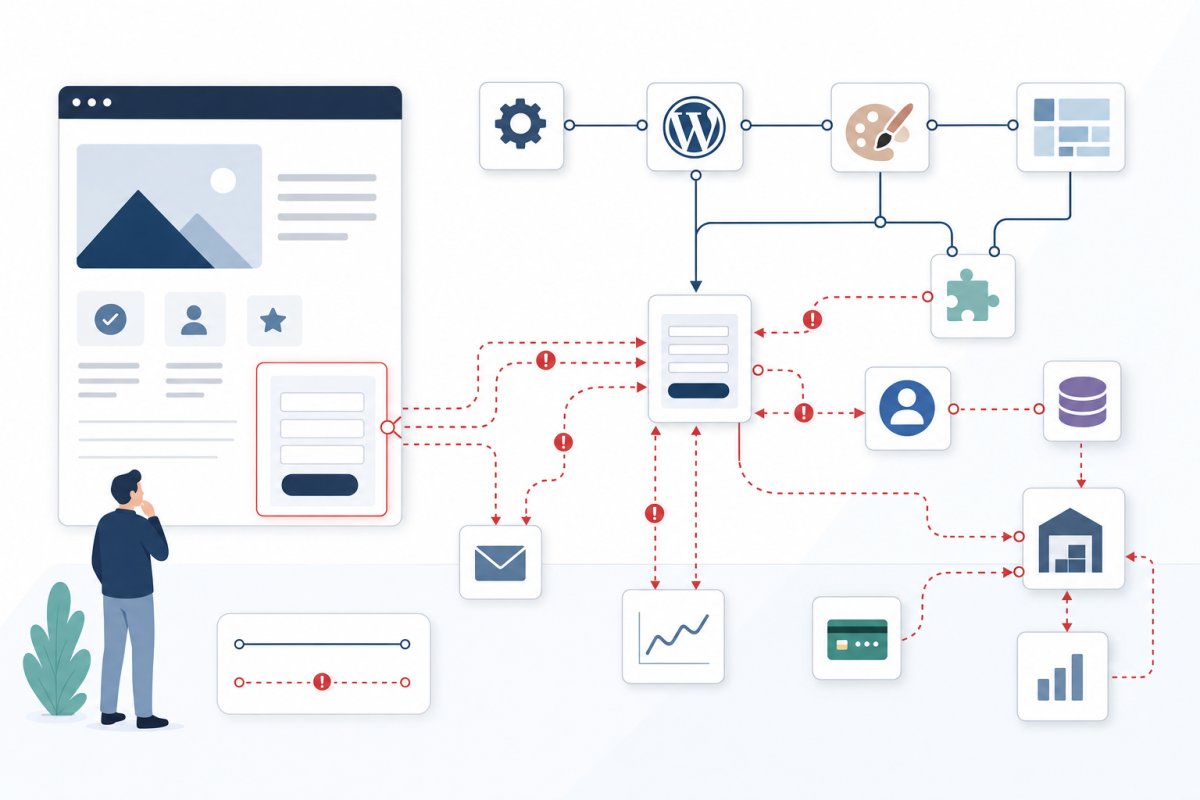
When your own website sends the customer to an external booking engine, checkout or payment solution, that flow does not disappear from the risk assessment. The service must be assessed based on the consumer’s ability to find an offer, understand the terms, make relevant choices, correct information and enter into the contract without accessibility barriers. An attractive and technically correct header therefore carries little weight if the product filter cannot be operated with a keyboard, the login process lacks clear instructions or the order confirmation cannot be read using assistive technology.
Example: After remediation, a customer should be able to select delivery, identify and correct a form error, and complete payment using only a keyboard, even when the checkout opens in an embedded module provided by another supplier.
Disproportionate Burden Must Be Assessed for Each Measure and Be Reviewable Afterwards
A high quotation or a fully booked development schedule does not in itself demonstrate that a legal requirement imposes a disproportionate burden. The business must link the cost to a clearly defined measure and weigh it against available resources, usage, the consequences for people with disabilities and possible alternatives, such as a simpler component or a temporary but functional fallback flow. The assessment must be completed before the issue is left unresolved and revisited when supplier contracts, technology, funding or financial circumstances change. This allows the company to demonstrate why the specific measure was postponed without creating a blanket exemption for the rest of the service.
Example: Replace the note “too expensive” with a record containing the quotation, usage data, affected customer groups, solutions considered, impact on the purchase flow, decision date and date of the next reassessment.
An Automated WCAG Report Is Not a Verifiable Delivery of a Working Purchase Flow
Automated tools can detect issues such as missing machine-readable labels, certain contrast failures and incorrect heading structures, but they cannot determine whether the focus order feels logical or whether an error message helps the customer move forward. Manual testing is also required for dynamic variant selectors, modals, product carousels, form validation and payment steps where the interface changes without a page reload. The order should specify which browsers, assistive technologies, screen sizes and user flows must be tested, as well as what is required before an issue can be marked as verified. The e-commerce business remains responsible for the service it offers and should therefore have access to the test evidence even when the platform provider, web agency and payment partner share the development work.
Example: A verifiable acceptance test can combine axe or Lighthouse with a complete keyboard test, 200 per cent zoom and reflow, and NVDA with Firefox or VoiceOver with Safari. The result must show whether the customer can actually complete the purchase, not merely how many automated warnings remain.

Questions That Reveal Your Real Accessibility Risk
Is Our E-commerce Service Actually Covered by the Act, or Are We Relying on an Exemption We Have Not Verified?
If consumers can purchase, book or enter into contracts digitally, the starting point should be that the e-commerce service has been covered since 28 June 2025. A microenterprise providing services may be exempt if it has fewer than ten persons employed and meets the financial threshold, but the conclusion must be based on documented staffing, financial and ownership information. Without such documentation, the business does not have a verified exemption—only an assumption.
Can a Customer Complete the Entire Purchase Without a Mouse, Vision or Assistance from Customer Service?
Ask a tester to find a product, select a variant, modify the shopping cart, enter information, trigger an error, select delivery, pay and read the confirmation using a keyboard and screen reader. If the journey breaks down in the BankID flow, cookie banner, a third-party widget or the payment module, the barrier must be addressed through remediation, supplier requirements, replacement or an accessible alternative. Customer service may provide support, but it must not be the only route to a purchase that other customers can complete independently.
Has Our Supplier Demonstrated Actual Compliance, or Merely Promised That the Solution Meets WCAG?
A generic WCAG clause in a contract says nothing about how your specific theme, integrations and product data work together. Request test results for each relevant page type and critical user flow, identified non-conformities, the assistive technologies used and a scheduled plan under which corrected issues are retested. EN 301 549 and WCAG 2.1 Level AA provide central technical benchmarks, but the supplier must also demonstrate how the actual service and mandatory customer information meet the applicable requirements.
Do We Know Which Accessibility Issues Block Purchases and Which Mainly Cause Frustration?
First prioritise barriers that make it impossible to navigate, select a product, understand prices and terms, complete forms, correct errors or make a payment. A keyboard trap in the checkout normally presents a greater business and user risk than a minor issue on a rarely visited inspiration page, although both should be recorded. When the report distinguishes between blocking, serious and minor issues, the budget can be directed towards actual customer impact rather than the problems that happen to be easiest to fix.
Can We Demonstrate How We Manage Accessibility When a Customer or Supervisory Authority Asks?
The business should be able to provide current accessibility information, the name of the person responsible, an inventory of known issues, test reports, supplier requirements and a process for receiving and handling feedback. The documentation must also show which corrections have been completed, which are awaiting action by an external supplier and when the next review will take place. If a measure has been exempted as disproportionately burdensome, the specific assessment must be available for review without the organisation having to reconstruct the reasons for the decision after the event.
In 2026, the question is not whether the requirements are coming, but whether you can demonstrate that they are being managed systematically within a service that is already regulated. Start with the purchase flows that affect the most customers and generate the most revenue, and commission verifiable results rather than a general promise of accessibility.